
Free Composite Decking Samples: What to Request and How to Test Them
How to order free composite decking samples, what a sample can and cannot tell you, and a simple outdoor test that reveals heat, fade and slip performance before you buy.
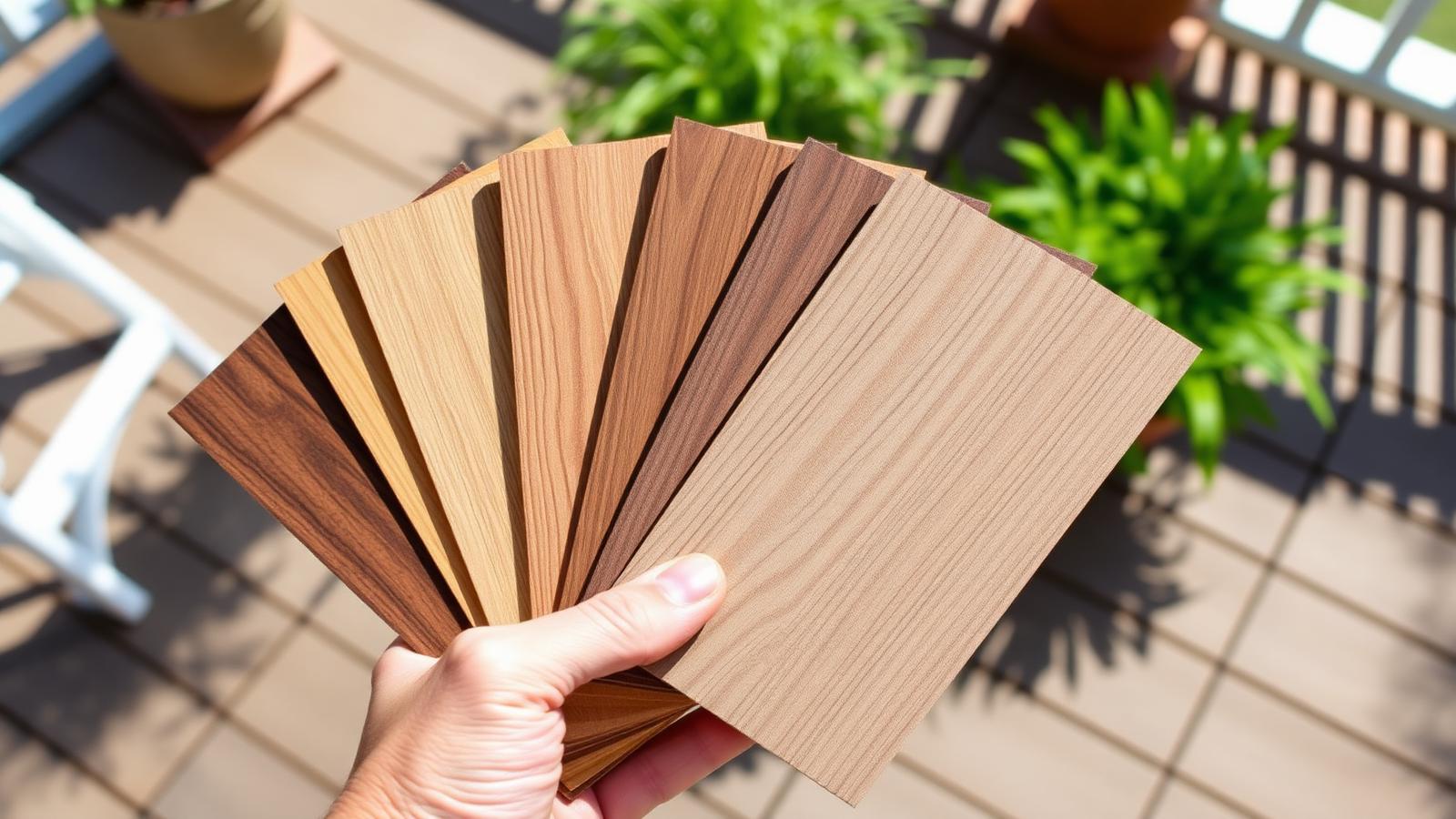
Most composite decking manufacturers send free samples: a short offcut of board, usually 10-15 cm long, showing the surface texture, colour and edge profile. It costs nothing and it is the single most useful step before committing to a deck.
The mistake is treating samples as paint chips. A composite board's real differences — surface heat, slip resistance, fade and scratch behaviour — only show up when you test outdoors.
How to request samples
- Find the manufacturer's official sample form rather than a reseller landing page.
- Request three to five colours, including one lighter than your first choice.
- Ask for both capped and uncapped ranges if the brand sells both.
- Note the collection name on each sample as it arrives — offcuts look similar after a week.
- Expect delivery in one to three weeks; order before you finalise the build date.
The four-part outdoor test
| Test | Method | What it tells you |
|---|---|---|
| Heat | Leave in direct midday sun for 30 min, touch barefoot | Comfort on hot days — dark boards get significantly hotter |
| Slip | Wet the surface and tilt at an angle | Safety around pools and in rain |
| Scratch | Drag a key and a chair foot across it | How it will age with furniture |
| Fade | Cover half with tape, leave outside 4-6 weeks | Real colour stability, not brochure claims |
Capped vs uncapped, and what samples reveal
Capped composite has a polymer shell bonded to the core; uncapped does not. Look at the cut end of the sample: a capped board shows a visible outer layer. Capped boards resist stains and fading far better, which is why the price difference is usually justified for a deck that sees food and drink.
Pros
- Samples are genuinely free from most brands
- Reveals texture and heat you cannot judge online
- Lets you compare against your house colour in daylight
Cons
- Small offcuts under-represent large-area colour
- Delivery can take weeks
- Some resellers ask for a deposit — go direct instead
Budgeting from the sample stage
- Measure your deck area and add 10% for cuts and waste.
- Price boards, joists, fixings and fascia separately — fixings are frequently forgotten.
- Ask the brand for the warranty document, not just the headline number of years.
- Check the required joist spacing; some composites need closer centres than timber.
Evaluating Surface Texture and Embossing Styles
Ordering a broad variety of free composite decking samples allows you to compare different surface treatments side by side before committing to a major investment. Manufacturers utilize distinct embossing and finishing techniques to replicate natural wood grains, ranging from deep structural grooves to subtle brushed textures. Holding these physical pieces in your hands gives you a clear sense of how authentic the boards look and feel under different lighting conditions. Beyond aesthetics, the surface finish directly impacts barefoot comfort, traction during wet weather, and how easily dirt sweeps away during routine maintenance.
Evaluating Traction and Texture Variations
When inspecting your composite decking sample pack, pay close attention to the tactile quality of each board finish. Deeply embossed grain patterns often offer superior slip resistance around swimming pools or damp garden areas, but they can collect windblown debris and pollen over time. Conversely, smoother or wire-brushed finishes provide a sleek, modern aesthetic that feels gentle underfoot, though they might perform differently when slick with rainwater. Testing these textures under real-world conditions helps you strike the ideal balance between safety, comfort, and ongoing cleaning effort for your space.
Decking Colour Samples: Matching Your Home's Architecture
Selecting the ideal hue for your outdoor living space requires more than looking at digital images on a computer screen. Ordering physical decking colour samples is the only guaranteed way to see how synthetic pigments interact with your garden lighting, house siding, and surrounding landscaping throughout the day. Direct morning sunlight can make cool gray tones look bright and vibrant, whereas warm cedar hues might take on rich golden undertones during late afternoon golden hours. Placing samples around your outdoor area prevents costly color mismatches before your order is delivered.
Harmonizing Decking Shades with Home Architecture
To create a cohesive design flow, place your free composite decking samples against your home's exterior walls, trim, and existing patio furniture. Multi-tonal boards featuring variegated grain lines are exceptional at concealing everyday dust, foot traffic marks, and pet paws compared to solid monochromatic boards. Additionally, dark chocolate browns and charcoal shades absorb signficantly more solar heat than light grey or sand-colored boards. Testing these shade variations in full afternoon sun helps ensure your deck surface stays comfortable for barefoot walking during scorching summer months.
Comparing Board Core Construction: Composite vs Wood Decking
Evaluating composite vs wood decking through physical samples highlights the clear material advantages engineered boards offer over traditional lumber. Traditional timber samples often reveal natural flaws like knots, splinters, and variable density that deteriorate when exposed to moisture and freezing weather. In contrast, composite boards feature uniform structural integrity designed to resist warping, rotting, and insect damage. By examining cross-sections of a composite decking sample pack, you can directly inspect internal core density, cap thickness, and air channels, confirming the long-term structural reliability of synthetic materials over traditional wood options.
Comparing Solid and Hollow Composite Profiles
Composite decking samples typically come in two main structural forms: solid core boards and hollow profile boards. Solid composite boards mirror the weight, density, and solid feel of natural timber, making them ideal for heavy furniture zones and high-footfall residential decks. Hollow boards feature engineered internal channels that reduce overall board weight and material expenses without sacrificing structural integrity. Reviewing physical cut-outs of both profile types allows you to evaluate edge finishing needs, joist spacing requirements, and total structural weight before finalizing your deck design.
Assessing Hidden Fasteners and Installation Hardware
Beyond evaluating surface beauty and core strength, free composite decking samples allow you to test hidden clip systems and installation accessories. Unlike traditional real wood decking, which usually relies on face-screwing through the surface of the boards, modern composite systems use concealed fasteners that slide seamlessly into side grooves. Utilizing physical samples alongside hidden clip accessories ensures you understand how board gaps are established for expansion, airflow, and drainage. Hands-on testing provides clear insight into how straightforward the assembly process will be for your build team.
Testing Fasteners, Gaps, and Perimeter Trims
When reviewing your sample pack, test how hidden clips secure into the board grooves and check the precise gap width left between adjacent boards. Proper spacing is essential for accommodating the natural thermal expansion and contraction composite materials undergo across seasonal temperature swings. Furthermore, checking matching fascia trim samples against board profiles ensures a clean edge finish around steps and elevated perimeters. Experimenting with fasteners on physical samples eliminates surprises during construction, securing a seamless, professional installation across your entire outdoor living area.
Frequently asked questions
- Are composite decking samples really free?
- From most major manufacturers, yes, including postage. Third-party sellers sometimes charge, so order directly.
- How many should I order?
- Three to five. More than that becomes hard to compare and slows the decision down.
- Does composite get too hot to walk on?
- Dark boards in full sun can be uncomfortable barefoot. The heat test above is the reliable way to judge it for your climate.
- How long does the fade test need?
- Four to six weeks of outdoor exposure gives a visible, honest result.
- Are composite decking sample packs completely free?
- Most manufacturers and retailers offer a composite decking sample pack completely free of charge, often including free shipping. However, some premium brands may charge a nominal fee of $5 to $10 to cover postage, which is frequently refunded as a credit if you eventually place a full order for your decking project.
- How big are typical decking colour samples?
- Most decking colour samples measure between 3 to 6 inches in length and display the full width and profile of the board. While this size is compact, it is usually large enough to test structural density, scratch resistance, slip performance, and how the pigments look under various outdoor light conditions.
- Can I use samples to compare composite vs wood decking?
- Yes, examining sample cut-outs is one of the best ways to evaluate composite vs wood decking. The sample lets you feel the synthetic capping, check moisture resistance, and test stain durability directly against real timber cut-outs, demonstrating why composite requires significantly less long-term maintenance.
- How long should I leave decking colour samples outside before deciding?
- It is recommended to leave your composite decking samples outdoors for at least one to two weeks. This timeframe allows you to observe how the surface handles direct sunlight, heavy rain, temperature drops, and daily household spills like grease, coffee, or mud.
Conclusion
Order samples direct from manufacturers, keep them labelled, and run the heat, slip, scratch and fade tests outdoors. A few weeks of testing costs nothing and prevents the expensive kind of regret.
Keep reading
- Free Printable Bunco Score Sheets and How to Run a Smooth Game Night
- Free Crochet Hooded Sweater Patterns and How to Adapt Them to Your Size
- أكواد فري فاير: كيف تستبدل الأكواد رسميًا وتتفادى المواقع المزيفة
- شحن جواهر فري فاير بالـ ID: الطرق الرسمية والفروق في السعر
- راهنمای جامع سایت ردیم کد گارنا فری فایر و ثبت جوایز
- دليل إعدادات ببجي الاحترافية لتحديد الأزرار والحساسية والصوت
- شحن شدات ببجي: الطرق الآمنة عبر الايدي والمتجر والبطاقات
- حقيقة هاك ببجي والنسخ المهكرة: لماذا تعرّضك للخطر وكيف تحمي بياناتك
Related articles

Free Printable Bunco Score Sheets and How to Run a Smooth Game Night
Everything you need to print Bunco score sheets that actually work: what each column means, how many sheets per table, paper settings and a clean scoring flow.
9 min read

Free Crochet Hooded Sweater Patterns and How to Adapt Them to Your Size
How to pick a free crochet hooded sweater pattern that fits: yarn weight, gauge swatching, hood construction methods and the adjustments that prevent a droopy hood.
9 min read

أكواد فري فاير: كيف تستبدل الأكواد رسميًا وتتفادى المواقع المزيفة
دليل عملي لاستبدال أكواد فري فاير عبر الموقع الرسمي، مع شرح شكل الكود الصحيح، أسباب رسائل الخطأ، وكيف تميّز مواقع الاحتيال قبل أن تخسر حسابك.
8 دقيقة قراءة

شحن جواهر فري فاير بالـ ID: الطرق الرسمية والفروق في السعر
شرح كامل لشحن جواهر فري فاير عبر المتجر الرسمي وموقع الشحن بالـ ID والبطاقات المدفوعة، مع مقارنة التكلفة وعلامات المتاجر غير الموثوقة.
7 دقيقة قراءة

راهنمای جامع سایت ردیم کد گارنا فری فایر و ثبت جوایز
آموزش کامل ثبت کد در سایت ردیم کد فری فایر، دانلود فری فایر با لینک مستقیم، دریافت ردیم کد امروز و نکات ایمنی جلوگیری از کلاهبرداری اکانت.
11 دقیقه مطالعه

دليل إعدادات ببجي الاحترافية لتحديد الأزرار والحساسية والصوت
تعرف على أفضل إعدادات ببجي الاحترافية: ضبط ازرار ببجي، الحساسية، السماعات المحيطية، قيادة سيارات ببجي، ورفع شعبية ببجي بطرق آمنة ومضمونة.
11 دقيقة قراءة
One useful guide a week
No spam, no daily digest. Just the guides worth reading.
Published by KnowSphere. Guides are reviewed and updated when platforms change their rules.